Gardening

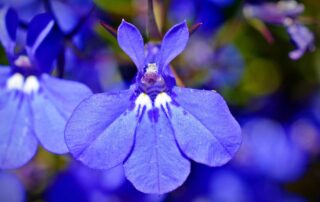
Great Blue Lobelia

Great Blue Lobelia forms a flower spike covered in deep blue flowers from late summer to early fall. The erect, 2-3 ft., stems produce lavender-blue, tubular flowers crowded together on the upper stem. Showy, bright blue flowers are in the axils of leafy bracts and form an elongated cluster on a leafy stem. This blue counterpart of the Cardinal Flower (Lobelia cardinalis) is a most desirable plant for woodland gardens especially since it blooms bright blue in late summer.

By |2022-08-21T09:39:24-04:00August 20th, 2022|Gardening, Landscaping, Native Plants, Organics, Sustainable Landscaping|

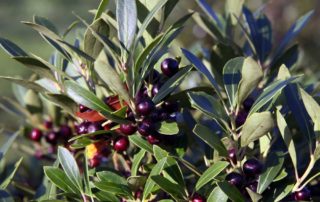
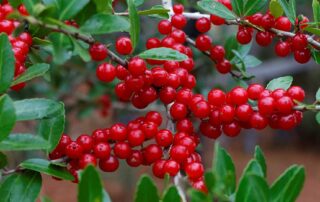
Inkberry – Ilex Glabra

Ilex Glabra, commonly called Inkberry is a mound-shaped, colony-forming shrub, somewhat open with age, 6-12 ft. tall and wide. Lance-shaped, sparingly-toothed, glossy, leathery foliage varies in color from dark- to light-green both in summer and fall. Inconspicuous flowers are followed by black berries which persist well into winter and are a favorite of birds and wildlife.

By |2022-07-07T13:55:38-04:00June 21st, 2022|Gardening, Landscaping, Native Plants, Sustainable Landscaping|

Hackberry – a Wildlife-Friendly Deciduous Tree

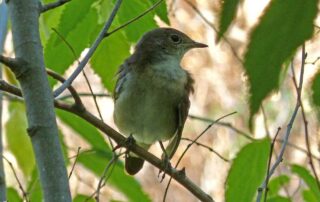
A hardy, urban shade tree, the hackberry (Celtis occidentalis) is very beneficial for wildlife; it is one of the best trees for providing food and shelter to birds and small animals. It is host to at least five different species of butterfly, including the Tawny Emperor, the Snout Butterfly, the Morning Cloak, the Question Mark, and of course, the rare Hackberry Emperor.

By |2022-05-18T12:11:13-04:00May 18th, 2022|Gardening, Landscaping, Native Plants, Sustainable Landscaping|

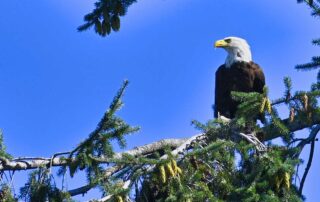
Bald Eagle Killer Identified As Non-Native Plant

This non-native plant, hydrilla, is killing our national symbol, the Bald Eagle. After a nearly 30-year hunt, researchers have shown that a neurotoxin generated by cyanobacteria on invasive plants is responsible for eagle and waterbird deaths from vacuolar myelinopathy. I for one can’t think of a better reason than this to utilize native plants.

By |2021-04-01T12:06:21-04:00April 1st, 2021|Gardening, Landscaping, Native Plants, Sustainable Landscaping|
Go to Top